
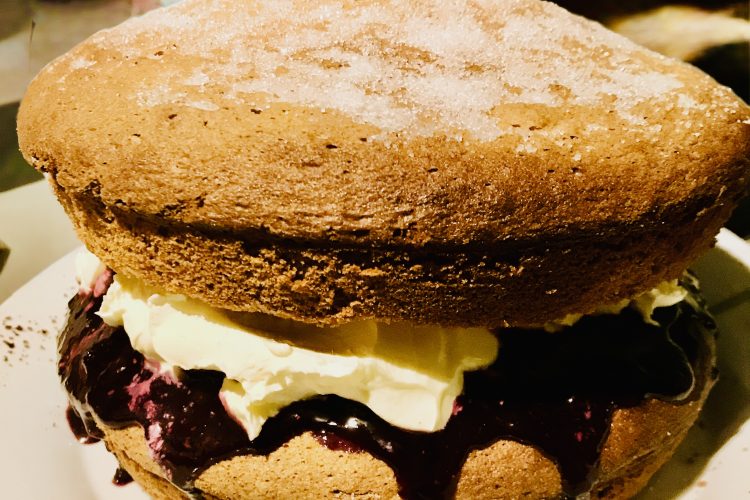
A Victoria sponge doesn’t need improving.
It needs care.
Even weights. Good butter. Gentle mixing. And a decision about how you want to finish it — simply, or with a little ceremony.
This is the version that works every time.
⸻
Ingredients
• 225g unsalted butter, softened
• 225g caster sugar
• 4 large eggs
• 225g self-raising flour
Optional:
• 1 tsp vanilla extract
• 1–2 tbsp milk (only if needed)
⸻
Method
1. Prepare the tins
Heat the oven to 180°C (160°C fan).
Grease and line two 20cm round cake tins.
2. Cream the butter and sugar
Beat together until pale and soft — not whipped, just light.
3. Add the eggs
Add the eggs one at a time, mixing gently.
If the mixture looks like it might curdle, add a spoonful of the flour.
4. Fold in the flour
Sift in the flour and fold gently until just combined.
Add a splash of milk only if the mixture feels stiff — it should drop easily from the spoon.
5. Bake
Divide evenly between the tins.
Bake for 20–25 minutes, until lightly golden and springy to the touch.
6. Cool
Leave in the tins for 5 minutes, then turn out and cool completely.
⸻
Filling & Finishing
This is where you choose the mood.
For comforting simplicity
• Good-quality jam (strawberry or raspberry)
• A light dusting of caster sugar
Nothing more is needed.
⸻
🌿 Artisan Layer: A little ceremony
If you want something more decadent:
• Whipped double cream or soft buttercream
• A generous layer of jam
• Finish with:
• fresh berries
• or a light topping of cream and fruit
The best versions aren’t overfilled.
They’re generous, but restrained.
The sponge should still taste of butter, eggs and care.
⸻
Feeding & Hosting Notes
• Serves: 8–10 slices
• Make ahead: Bake the sponges a day ahead, fill on the day
• Transporting: Dust with sugar rather than cream if travelling
• Doubling up: Two Victorias always go before you expect
This is a cake people recognise — and that familiarity is part of its power.
⸻
A quiet reassurance
You don’t have to choose between simple and special.
Both belong at the table.